
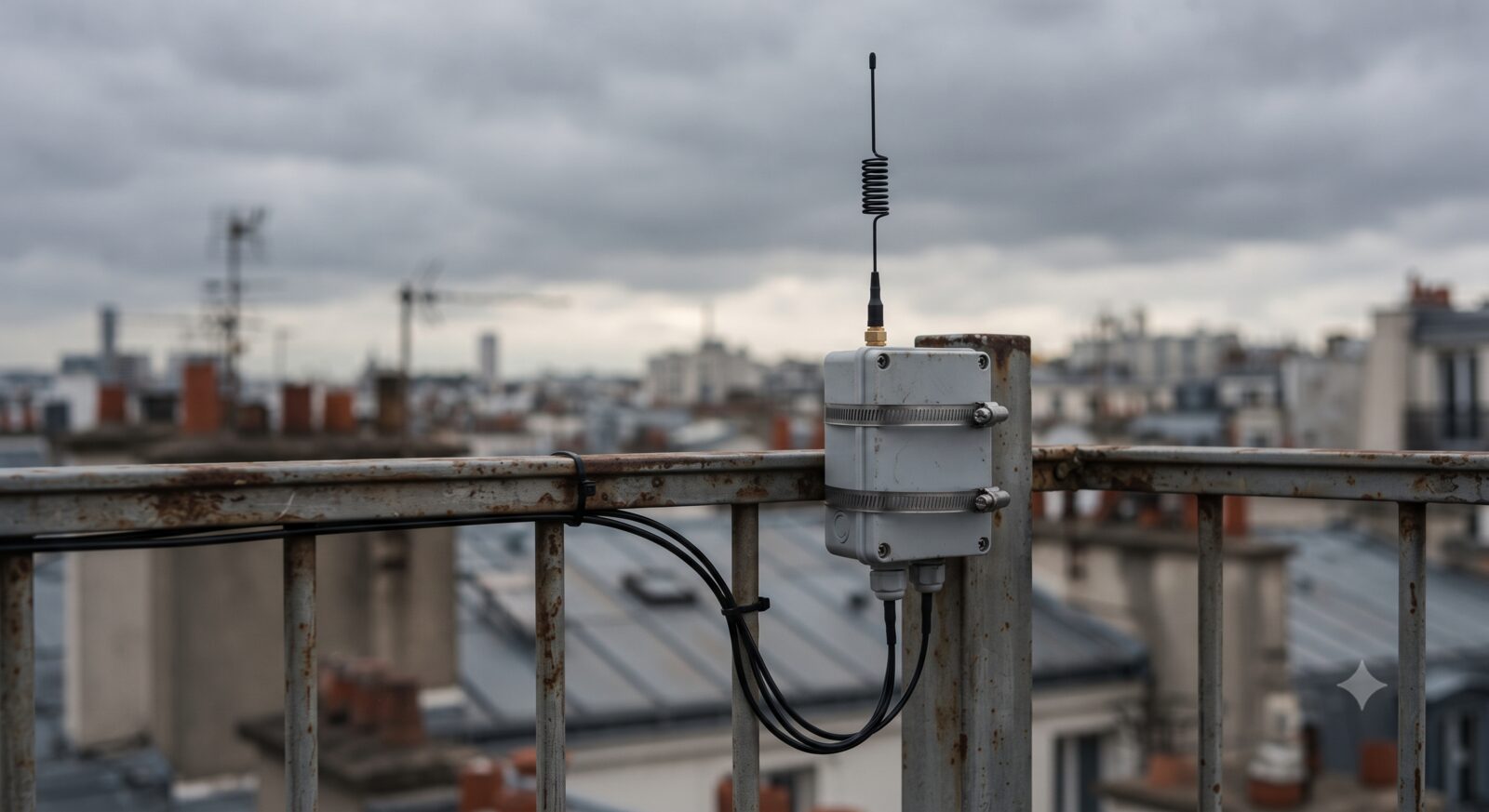
A Meshtastic node that worked fine on the bench and then barely reaches the next room once it’s deployed is one of the most common frustrations in a DIY sky-watch build. Range problems almost always come down to a small number of fixable causes — here’s how to actually diagnose one.
Antenna Placement Matters More Than Antenna Specs
It’s tempting to assume a weak signal means you need a higher-gain antenna. In practice, placement usually matters more than the gain number printed on the box. Get the antenna outdoors and as high as reasonably possible — a node sitting on an indoor shelf, surrounded by walls and electronics, will underperform even an average antenna mounted outside with a clear line of sight. Line-of-sight paths (rooftop to rooftop, hilltop to hilltop) reach dramatically farther than the same hardware trying to push a signal through buildings or dense trees.
The Troubleshooting Checklist
- Confirm matching settings on both nodes first. Region setting, modem preset, and channel configuration all have to match between nodes — a mismatch on any one of these can look exactly like a range problem when it’s actually a configuration problem.
- Move the antenna outdoors before changing anything else. This single change resolves more “range problems” than any hardware swap.
- Increase antenna height. Even a modest increase in mounting height can meaningfully extend range by clearing nearby obstructions.
- Test a genuine line-of-sight path. Before concluding the hardware itself is underperforming, test between two points with a clear view of each other — this isolates whether the limitation is the equipment or the terrain between your actual station locations.
- Only then consider an antenna upgrade. Once placement, height, and line-of-sight are confirmed and range is still inadequate, a properly matched higher-gain antenna is a legitimate next step — but it’s the last item on the list, not the first.
What Realistic Range Actually Looks Like
Expectations matter here. A typical link between two stations in mixed terrain — some obstructions, moderate distance — generally covers a modest number of miles. A genuine line-of-sight link between two elevated points (hilltop to hilltop, or two rooftops with nothing between them) can reach dramatically farther, sometimes tens of miles. Community-documented long-distance records exist well beyond that, but those are optimized point-to-point tests, not what a typical multi-obstruction sky-watch deployment should expect day to day.
One Safety Note
Never run a Meshtastic node with a poorly matched or missing antenna, even briefly for testing. A radio transmitting into a bad antenna match reflects power back into the radio itself, which can generate enough heat to damage the chip. Always have a properly matched antenna connected before powering on and transmitting.
Once your mesh link is reliable, the next thing worth thinking about is what happens to the observation data and footage it’s helping you capture — see our guide on protecting sky-watch data and footage for that.
Frequently Asked Questions
My two nodes are close together and still won’t connect. Is that a range problem?
Almost certainly not — short-distance connection failures are nearly always a settings mismatch (region, modem preset, or channel), not a range limitation. Check those first before assuming it’s a hardware or placement issue.
Does a more expensive antenna automatically mean better range?
Not by itself. A high-gain antenna in a poor location (indoors, low mounting height, obstructed path) will still underperform a modest antenna placed well. Fix placement before spending more on hardware.
Do all stations in a mesh need to reach each other directly?
No — that’s the actual point of mesh networking. Nodes can relay through each other, so two stations that can’t reach each other directly can often still communicate through a third node positioned between them.